Key takeaways
- Springs, not the opener, do the heavy lifting.
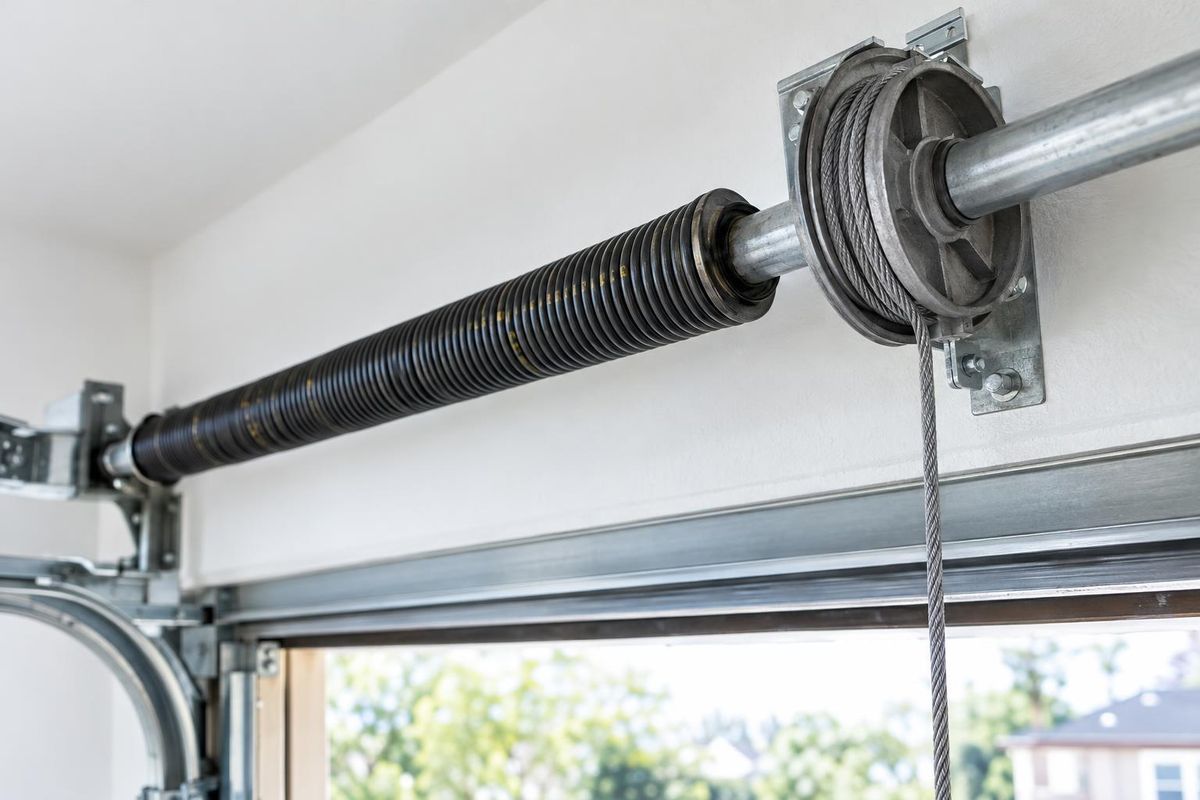
- Torsion springs sit above the door, extension springs run along the sides.
- Springs have a limited cycle life, so heavy use wears them faster.
- Do not adjust or replace springs yourself.
What the springs actually do
A typical garage door weighs well over a hundred pounds. Springs store energy as the door closes and release it as it opens, so the door feels nearly weightless when it is balanced. The opener only has to guide it.
That is why a broken spring is such a sudden problem. The opener cannot lift the full weight, and the door can feel suddenly very heavy.
Torsion and extension springs
Torsion springs are mounted on a steel shaft above the door opening and twist to store energy. They are smoother, safer and longer lasting. Extension springs run along the horizontal tracks and stretch, and they need safety cables to contain them if they fail.
Most newer homes in the Nashville area use torsion springs. Older doors and some budget builds still use extension springs.
Why springs break
Springs are rated for a number of open-and-close cycles, commonly around ten thousand for standard springs. A busy household can reach that sooner than you would think. Rust, humidity and poor lubrication shorten life.
When a torsion spring breaks you may hear a loud bang from the garage, and you may see a gap in the coil.
Why replacement is not a DIY job
Springs hold a great deal of stored energy. Winding bars slipping or a spring releasing can cause serious injury. Professionals use the proper tools and balance the door afterward.
If a spring has broken, avoid forcing the door. Call for service, and keep people and vehicles clear of the door in the meantime.
Quick answers
Should I replace both springs at once?
Usually, yes. The second spring has done the same work and tends to follow soon after.
Can I open the door by hand after a spring breaks?
It is not recommended. The door is heavy and can drop. Wait for a technician.